In 2002, a curious student asked if I taught Yin Yoga. Admittedly, I had to ask, “What is Yin Yoga?” She explained that it was a ‘lazy’ style of yoga from China, perfect for relaxation without much movement involved. At the time, I misunderstood it as a passive and easy practice. Only later did I realize how physically and mentally demanding Yin Yoga can be when taught correctly.
Determined to understand the true meaning of Yin Yoga, I took a course with author and Yin Yoga Master, Biff Mithoefer. What I experienced in those classes was far from “lazy.” The long holds required patience, focus, and a deep awareness of the body. Classes explored gentle, passive stretches, with a focus on connective tissues and energies. I began to delve deeper into Yin Yoga, training with the founder of this unique style, Paul Grilley, over two years. During this time, I gained a significant understanding of Yin Yoga and the benefits it can offer when practiced correctly.
If you’re new to this practice or simply want to learn more, this complete guide will break down the core principles of Yin Yoga, its transformative benefits, and 5 Yin archetypes that’ll elevate your practice. So, if you’ve ever wondered what Yin Yoga is beyond relaxing asanas, keep reading.
What Is Yin Yoga?
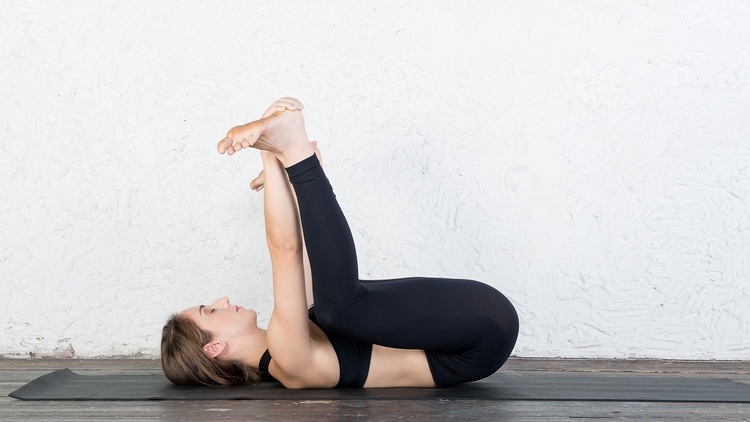
Yin Yoga is a slow-paced style of yoga where poses are held for 3 to 10 minutes to gently stress the body’s deep connective tissues, such as fascia, ligaments, and joints. The muscles stay relaxed so the stretch can reach deeper layers of the body. At the same time, the stillness of the practice helps calm the mind and nervous system.
The main purpose of Yin Yoga is to improve joint mobility and flexibility while training the mind to stay present in stillness. It is often used to balance more active lifestyles or dynamic yoga practices.
It’s widely believed that Yin Yoga originated in China, but the practice is in fact deeply rooted in the time-honored tradition of Classical Hatha Yoga. Initially, Hatha Yoga, with its long holds, was a monk’s discipline, where poses would be held for up to 10 minutes at a time. However, as gurus like Swami Sivananda introduced it to the masses, durations were adjusted to 1-3 minutes to make it more accessible.
Yin Yoga can easily be distinguished by its focus on passive (yin) postures, which minimize muscle activity and stretch the connective tissues. It’s about effortlessly settling into a pose, often supported by props such as cushions and bolsters. While the postures are reminiscent of Classical Hatha Yoga asanas, they’ve been renamed to stand apart. Paul Grilley describes Yin Yoga quite perfectly in his book as “old wine in a new bottle.” Keep reading to find out the key differences between Yin and Hatha Yoga.
Is Yin Yoga suitable for beginners?
Yes, Yin Yoga is suitable for beginners because the poses are simple and mostly done on the floor. You don’t need strength or flexibility to start. However, beginners should use props and avoid going too deep into a stretch.
In my classes, I often see beginners improve quickly because the slower pace gives them time to understand how their body responds.
Origin & History of Yin Yoga
Yin Yoga as we know it today was developed in the late 20th century by Paul Grilley. It was inspired by Taoist practices, traditional Chinese medicine, and long-held postures found in yoga traditions. These influences were combined into a modern system that focuses on deep tissue stretching and energy flow.
While long-held poses also exist in classical Hatha Yoga, Yin Yoga is unique in how it combines these holds with the meridian theory from Chinese medicine.
Over time, he began to teach some passive stretching classes to his students. The results were overwhelming; he saw rapid improvement in the range of motion of his students. Inspired by Buddhism, he called his classes Yin Yang Yoga. Grilley’s student, Sarah Powers, suggested a better name would be Yin Yoga given the focus on passive postures. And thus, Yin Yoga was born.
Key Characteristics of Yin Yoga
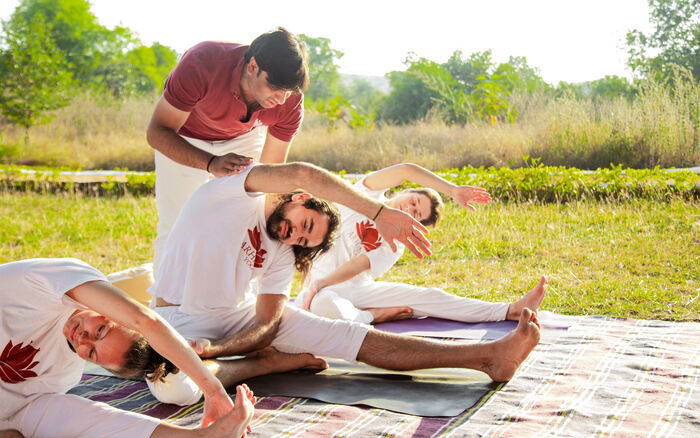
Yin Yoga is defined by long-held, passive poses, relaxed muscles, and a focus on deep tissues rather than strength. The practice is slow, still, and often supported with props to allow the body to release tension safely.
Long-Held Yoga Poses
In Yin Yoga, poses are typically held for a generous 5 to 10 minutes. This stands in contrast to the dynamic practices of Ashtanga Vinyasa and Vinyasa Flow, where poses last 5 to 10 breaths.
While Hatha Yoga is more static by nature, beginners usually maintain a pose for no more than 3 minutes, still shorter than in Yin Yoga. (Side note: Historically, asanas often had 5 to 10-minute holds too!)
When we hold a pose for a longer period, we bring the stretch to the yin tissues, which are the deeper tissues such as the tendons, fascia, ligaments, and the other connective body tissues. Our yin tissues are less vascular (supplied with blood) and elastic and, therefore, need more time to stretch. When stretched regularly, it increases the overall flexibility, circulation, and range of motion in the joints and ligaments.
On the other hand, dynamic styles like Vinyasa emphasize muscle movement and stretching. Muscles, being yang tissues, warm and stretch quickly but cool and retract just as fast. That’s why if you miss a few days of practice, you might notice a decrease in both flexibility and strength.
So, if you practice only dynamic forms of exercise or yoga, you will gain muscle strength, but not necessarily a wider range of motion. To have a healthy range of motion around our joints, many of us need to also stretch the deep connective tissue and the joints. According to Paul, Yin Yoga is a complementary practice, not a substitute for the more Yang exercises.
Try these: 8 Seated Yoga Poses for Flexibility
Breathing Patterns
Conscious, controlled breathing is a central aspect of yoga. The way we regulate our breathing affects how our muscles and minds respond to a particular pose. We often practice calming breathing exercises before and during our practice to find focus and stillness, among many other benefits.
- In Yin Yoga, the emphasis is on relaxed belly breathing. Long, slow, and deep breaths promote total relaxation, helping you hold a pose for longer durations and access new depths.
Understanding the Meaning of Yin & Yang in Yoga
The concept of yin and yang is similar to that of the Ida (moon) and Pingala (sun) from the Hatha Yoga tradition. Yin Yang is mentioned in traditional Chinese medicine, and Ida Pingala is mentioned in yoga and Ayurveda.
These are ancient principles that describe the two opposite forces in nature present in everything. The principle of yin and yang, while contrary to each other, is not rigid but relative. The unique qualities of yin and yang are as below:
- Yin: Slow, soft, passive, and cold. It is also associated with water, earth, moon, femininity, heaviness, and night.
- Yang: Fast, hard, active, hot, masculine, light, and day.
In yoga, we see this difference in the practice of asanas. Some poses are passive and activate yin tissues and qualities, whereas other poses are more dynamic, activating yang tissues.
Differences Between Yin & Yang Tissues
How do you identify yin and yang tissues in your body? We can break it down by analyzing the movement of the body and which parts we are activating in any given pose.
|
Yin Tissues |
Yang Tissues |
|---|---|
|
|
|
Resist stretching & rebound slowly like dough. |
Stretch easily & rebound quicker, like rubber. |
While yang and yin tissues are distinctly different, all tissues are a blend of yin and yang qualities. For example, the tendon of a muscle can be dense like a ligament (yin), but the muscle can be quite elastic (yang).
Furthermore, Paul Grilley maintains that all tissues can be worked in a yin or a yang way. Yang, for instance, is rhythmic and repetitive like weightlifting, or running in which targeted muscles are generally contracted, while yin is slow with static-like traction where the targeted muscles are relaxed. If you train fascia in a yin way, it becomes longer and more elastic, while yang makes it shorter, stronger, and stiffer.
5 Functional Principles of Yin Yoga
At the core of Yin Yoga are three primary stresses: tension, contraction, and compression. Flexibility refers to the extensibility (capacity to stretch) of the myofascial groups, ligaments, joint capsules, and discs. Compression is the ultimate range of motion in every person. However, range of motion varies from person to person, and the maximum in a pose looks and feels different depending on your anatomy. To avoid injury and reap the many benefits of Yin Yoga, it’s essential that you keep these principles in mind when practicing and teaching:
1. Apply Stress Gently
The true essence of yoga is to balance the flow of prana (or life energy) within us. In Yin Yoga, this balance is achieved by strategically stressing our bodies’ deep connective tissues. When these tissues are gently stressed, energy flows more freely, promoting balance within and overall well-being.
2. Make Mindful Movements
When practicing Yin Yoga, remember there’s no “one-size-fits-all” or perfect pose. Every adjustment, be it in the hand, foot, or spine, either aids or hampers our ability to target specific areas. Because everyone’s anatomy varies, it’s vital to listen to your body and find the position that works best for you.
3. Stick to a Safe Discomfort Level
Everyone’s skeletal system is unique. This means what feels comfortable or achievable for one person might be challenging or even unattainable for another. It’s essential to approach Yin Yoga with an understanding and acceptance of these differences, focusing on what feels right for your own body.
I always encourage my students to aim for the orange zone of discomfort. In this zone, you feel discomfort but can stay in the pose for the full duration. This allows for optimal level of stress and stretch, targeting the connective tissues and providing the maximum benefit.
4. Find Stillness
Once you reach a tolerable level of intensity, be still. This is one of the most challenging parts of Yin Yoga, as you’ll need to muster the mental strength to fight off fidgeting and the natural urge to exit a pose. However, maintaining stillness for up to 5 minutes in each pose is necessary to effectively stretch the tissues. If you feel your mind begin to wonder or muscles itch, try to bring your awareness inwards. Props are also encouraged to ease tension and provide support in certain areas.
5. Exit Slowly
After sinking into the stillness of a Yin Yoga pose, the body’s deeper tissues, muscles, and joints may have been under sustained stress or placed in strange positions. Therefore, when releasing from a Yin Yoga pose, particularly one held for an extended duration, it’s essential to move gently and deliberately. A hasty exit can be dangerous for the body, potentially leading to injury. Think of this slow release as giving your body the time it needs to adapt and recalibrate.
Who should be careful with Yin Yoga?
Yin Yoga is generally safe, but it is not suitable for everyone in the same way.
You should practice with caution if you:
- have joint injuries or instability
- are very flexible or hypermobile
- are pregnant, especially in later stages
In these cases, it’s important not to push deeply into poses. The aim is gentle stress, not maximum stretch.
What Are the Benefits of Yin Yoga?
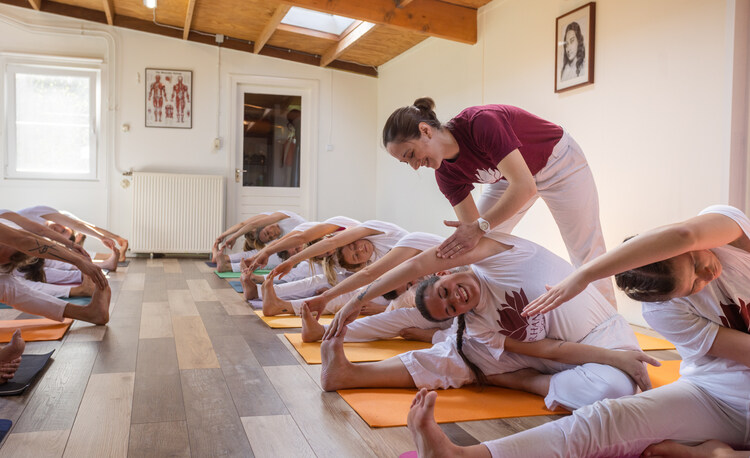
Yin Yoga offers both physical and mental benefits. By holding poses for longer periods, it improves flexibility, supports joint health, and helps calm the nervous system.
The most important Yin Yoga benefits include the following:
- Improved flexibility: Long holds gently stretch deep tissues, helping increase range of motion over time.
- Better joint mobility: It keeps joints healthy by improving circulation in less-used areas.
- Reduced stress: The slow pace activates the body’s relaxation response.
- Calmer mind: Stillness helps improve focus and mental clarity.
- Supports recovery: It balances intense workouts and active lifestyles.
How often should you practice Yin Yoga?
Most people benefit from practicing Yin Yoga 2 to 3 times a week. Because the stretches go deep into the joints, the body may need time to recover.
In my experience, practicing in the evening often feels better, as the body is already warm and more open.
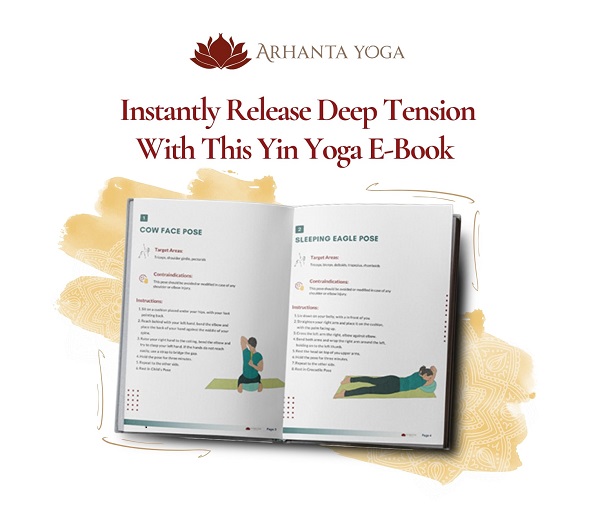
Sign up for our FREE illustrated E-Book and get 10 Yin Yoga Poses to release & soothe stress in your upper body now.

What is the difference between Yin Yoga and other yoga styles?
The main difference is the pace and focus. Yin Yoga is slow and passive, with poses held for several minutes. Most other yoga styles are more active and focus on movement and muscle strength.
Yin Yoga targets deeper connective tissues like fascia and ligaments, while other styles mainly work on muscles, balance, and flow.
In addition to this, Yin Yoga is often confused with Restorative Yoga, but they are different. In Yin Yoga, you apply gentle stress to the body to improve flexibility. In Restorative Yoga, the goal is complete relaxation with full support from props.
Yin Yoga Poses – The 5 Archetypes Explained
In Yin Yoga, most poses are variations of a few key shapes known as archetypes. These help you understand where you should feel the stretch, rather than trying to achieve a “perfect” pose.
In practice, I often guide students to focus on the target area instead of how the pose looks. This makes Yin Yoga more accessible for different body types.
According to Paul Grilley, the five archetypal poses in Yin Yoga are the following:
1. Shoelace
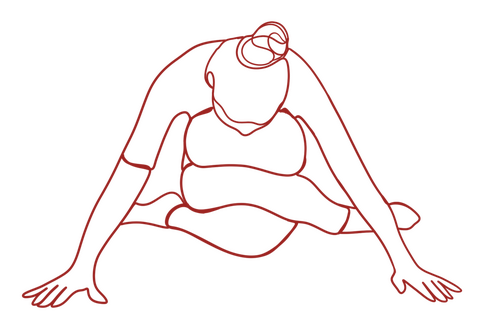
A deep hip-opening pose that targets the outer hips and glutes.
Target areas: Hips, glutes, lower back
Benefits: Helps release tension from long hours of sitting and improves hip mobility.
Note: If you feel pressure in the knees, sit on a cushion or stay upright.
2. Saddle
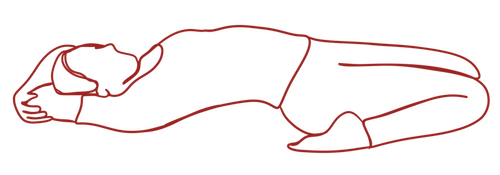
A gentle backbend that opens the front of the body, especially the thighs and hips.
Target areas: Quadriceps, hip flexors, lower spine
Benefits: Improves posture and helps counter the effects of prolonged sitting.
Note: Come out slowly if you feel compression in the lower back.
3. Caterpillar
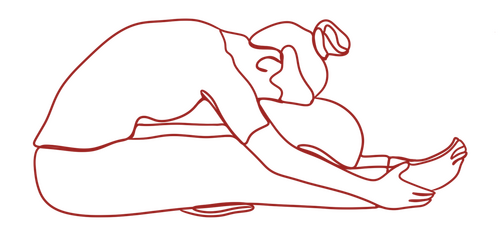
A forward fold that stretches the back of the body and encourages stillness.
Target areas: Hamstrings, spine
Benefits: Supports spinal flexibility and helps calm the mind.
Note: Bend your knees slightly if you feel strain in your lower back.
4. Dragonfly (Straddle)
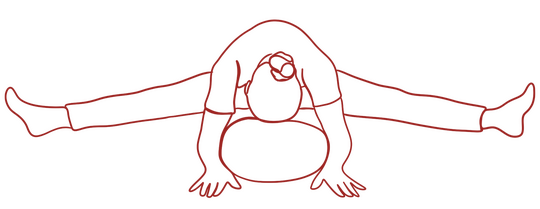
A wide-legged forward fold that opens the inner thighs and hips.
Target areas: Inner thighs, groin
Benefits: Improves flexibility in the hips and pelvis.
Note: Avoid forcing the stretch; focus on relaxing into the position.
5. Twist
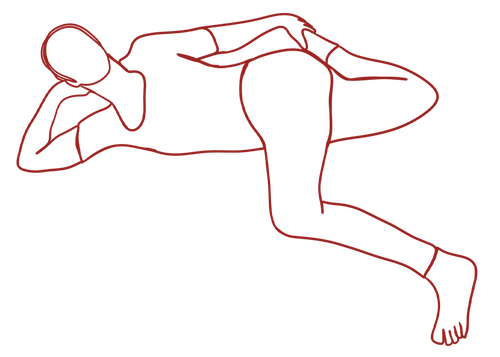
A gentle spinal twist that releases tension along the back and sides of the body.
Target areas: Spine, hips, waist
Benefits: Improves spinal mobility and supports digestion.
Note: Move slowly in and out of the pose to avoid strain.
Best Sequences in Yin Yoga
The purpose of a Yin Yoga sequence is to stretch and stress certain yin tissues in the body. Holding these passive poses for several minutes also allows the entire nervous system to calm down and the mind to fully relax. That said, it’s important to remember that an overly intensive Yin Yoga sequence can result in too much stress on a particular joint or region and have the opposite effect.
Whether you are a teacher or a practitioner wanting to try this practice at home, these 4 Yin Yoga sequences can be practiced daily to deeply stretch the connective tissues and improve range of motion. Each of these sequences has been purposely designed to target:
- Legs and spine
- Stress release
- Groin and lower spine
- Whole body
Also read: 75-Minute Yin Yoga Sequence: A Complete Practice for Deep Relaxation and Fascia Release
Use of Props in Yin Yoga
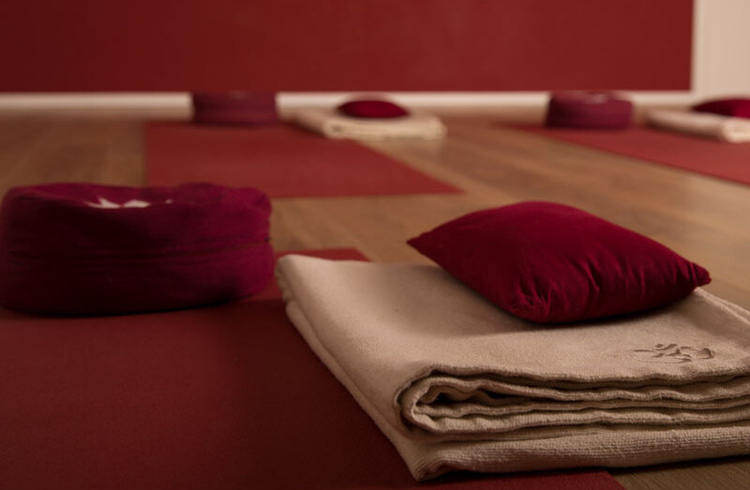
In Yin Yoga, it is common to use props to hold the pose in the proper manner. Yoga props can be used to increase or decrease stress and to take some of the body weight so we can become more comfortable in the pose. Sometimes props are also necessary to put more stress on a target area. Common Yin Yoga props include:
- Cushions
- Blocks
- Bolsters
- Belts / Straps
- Blankets
Tips for Using Props
When practicing Yin Yoga, follow the principle of:
- red zone (very uncomfortable, even painful),
- orange zone (uncomfortable but fine), and
- green zone (feel nothing) zone.
The goal is to find and stay in the orange zone.
- Use props only when required, or you can become dependent on them. The general rule is that if you need more than 2 cushions, you need to do a variation of this pose.
- Use wall variations when required.
See: How to Use Yoga Blocks: Poses, Benefits & Pro Tips
Final Thought
Yin Yoga offers a simple but powerful way to slow down, improve mobility, and reconnect with your body. Whether you are balancing an active lifestyle or looking for a calmer practice, Yin Yoga can support both physical and mental well-being when practiced with awareness.
Yin Yoga often reveals its depth gradually, through steady practice and the right understanding. For those who feel drawn to explore it more sincerely, we offer a 75-hour Yin Yoga Teacher Training where we take the time to study this practice in a clear, grounded, and practical way.
Sign up for our FREE illustrated E-Book and get 10 Yin Yoga Poses to release & soothe stress in your upper body now.